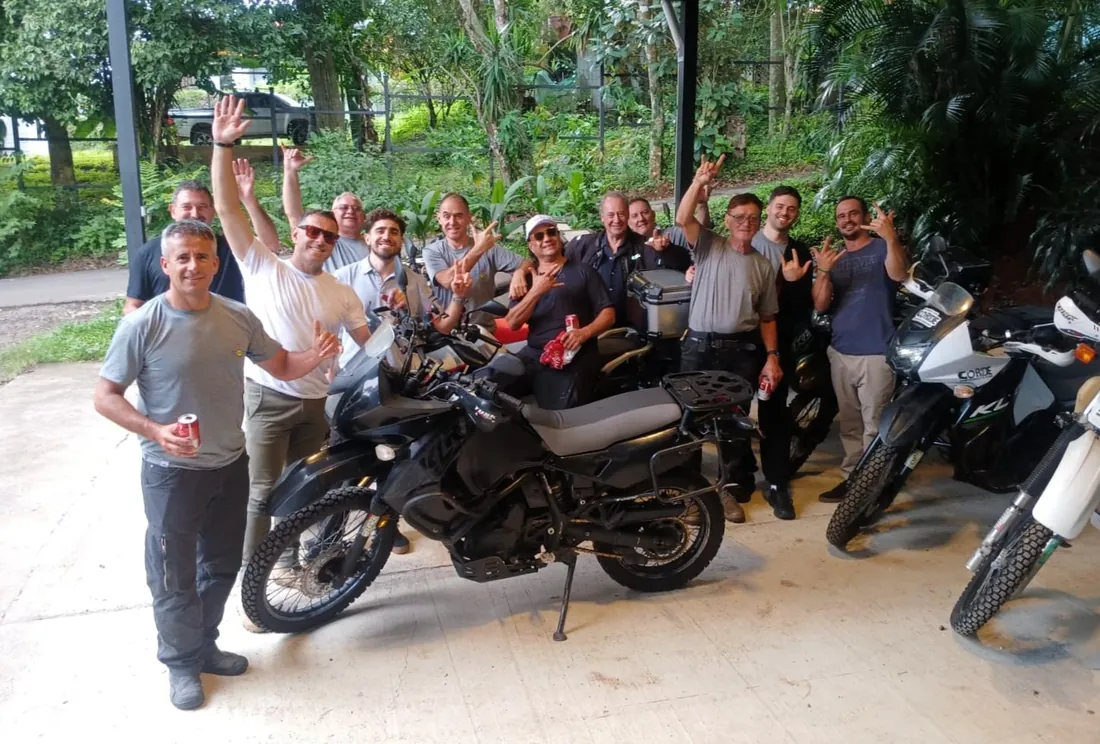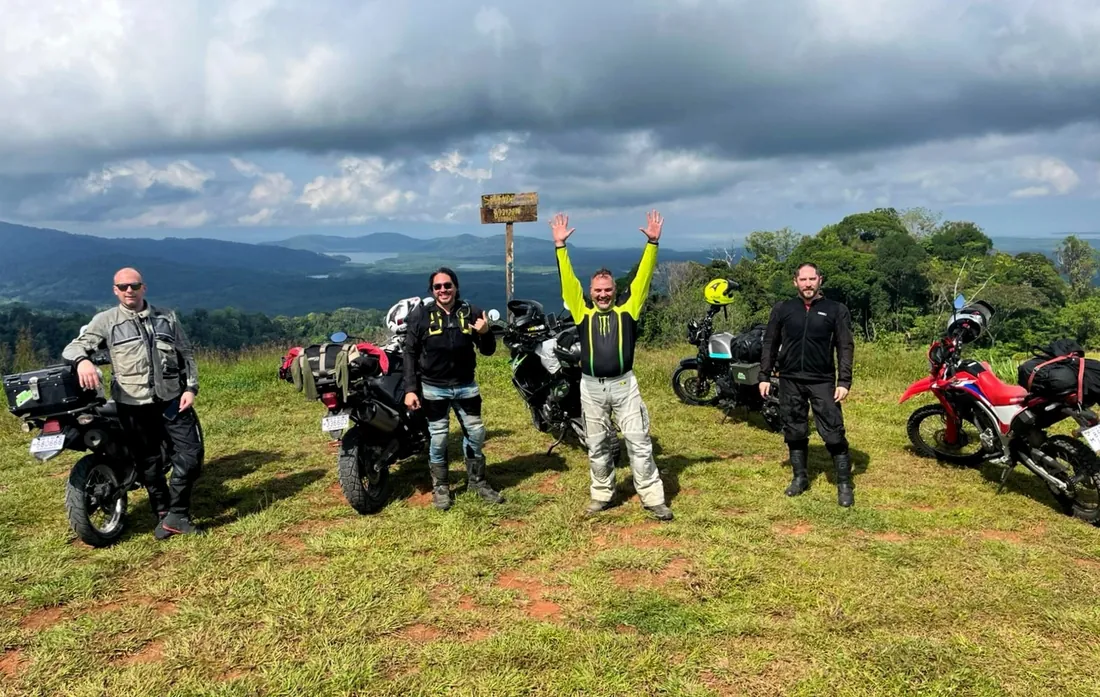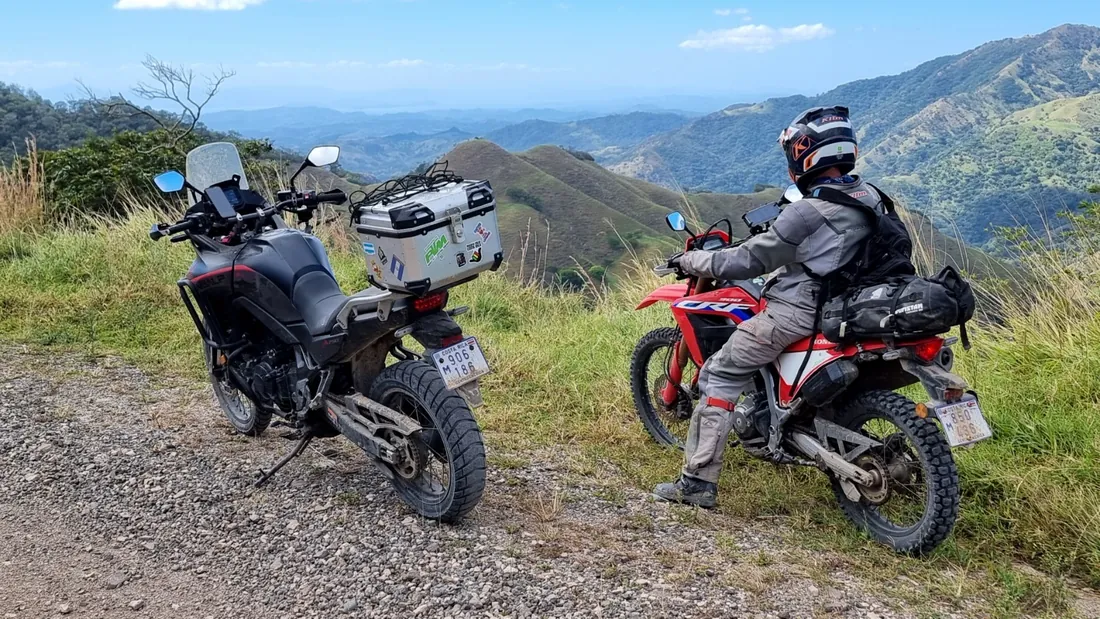
A soft bag, light layers and something for the rain: the list that fits on a motorcycle, and what you can leave at home.
Key points
- A soft bag rather than a hard suitcase: it straps onto all our bikes.
- Light, quick-drying clothes, plus a warm layer for the mountain passes.
- Rain gear, whatever the season.
- Dollars in small bills, and a plug adapter if you are coming from Europe.
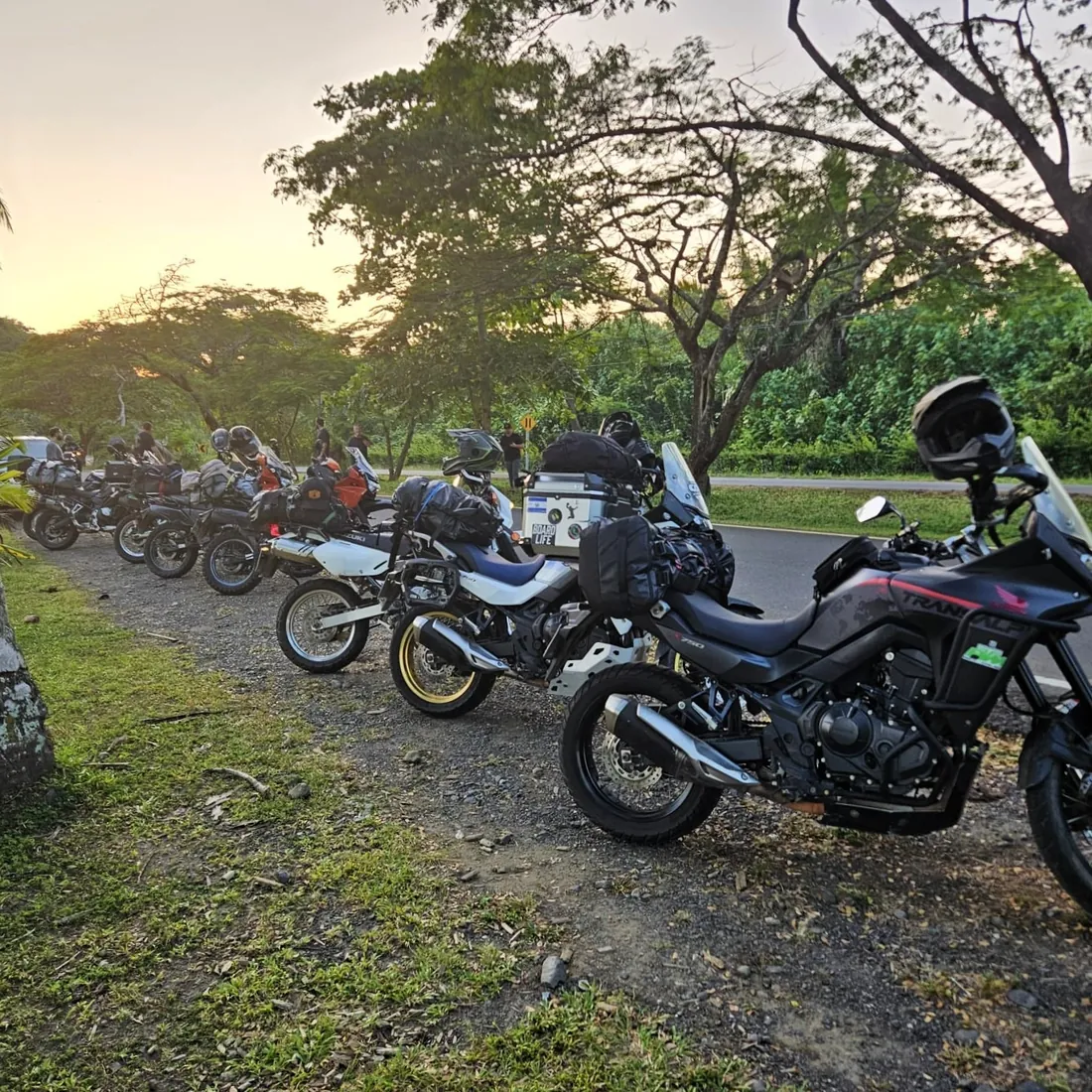
The classic trap on a motorcycle trip is packing too much. On a bike, every kilo shows in the corners and on the dirt, and an overstuffed bag becomes your enemy when it is time to strap it down. The good news: in Costa Rica it is warm, laundry is easy and you can find almost anything locally. Here is what we really pack for a motorcycle trip in Costa Rica, and what we leave at home.
Luggage: soft and light
A soft bag, waterproof if possible, beats a hard suitcase: it hugs the rack and straps down easily. All our bikes have a rear rack and an aluminum platform, and we provide the straps. Keep a small backpack for papers, sunscreen and your camera. And if you would rather not carry anything, a support vehicle can follow with the luggage.
Paperwork
- A valid passport, with at least six months left after your return if your tour goes to Nicaragua or Panamá.
- Your motorcycle license, covering the engine size, and an international driving permit if you have one.
- A bank card for the deposit, taken as a pre-authorization at departure.
- Travel insurance that covers motorcycling: many policies exclude it, so check yours.
- A digital copy of all this, on your phone and in your email.
Riding gear
If you have your own gear, bring it: it fits you and you know it. A vented jacket with a removable liner is ideal, as you go from the heat of the coast to the cool of the passes in a single day. Otherwise, helmet, gloves, jacket and rain gear are available as an option, at $15 per day. Only boots are not provided: bring your own, they are what protects your ankles on the dirt.
Clothes
- Three or four quick-drying technical T-shirts, to wear under your jacket.
- A light fleece for the passes, Monteverde and mornings at altitude.
- Light pants and shorts for the evening.
- A swimsuit, a microfiber towel and sandals.
No need to pack an outfit per day: many places to stay do laundry for a few dollars, and a technical T-shirt dries overnight.
Every year, the cold on the Cerro de la Muerte catches travelers out in summer jackets. Read our article on the pass
For rain and sun
- Full rain gear, even in the dry season: mountain showers don't give warning.
- Dry bags, or failing that, garbage bags inside your bag.
- High-protection sunscreen and sunglasses: in the tropics, the sun burns fast, even when it is cloudy.
- Mosquito repellent.
- A water bottle: you drink far more than you think under a helmet.
Electronics and money
- Your phone, with the country's maps downloaded for offline use.
- A power bank and your cables.
- A plug adapter if you are coming from Europe: Costa Rica uses American-style sockets, at 120 volts.
- US dollars in small bills, on top of colones: the dollar is widely accepted, as are bank cards in most shops.
What you leave at home
- The hard suitcase, which can't be strapped onto a motorcycle.
- A change of clothes for every day: you wash along the way.
- The toolkit: 24/7 assistance is included, and on guided tours the guide is a mechanic.
- Your drone, if your tour goes to Nicaragua: customs confiscates them.
- Valuables you won't need.
Heading to Nicaragua? It is all explained here: Crossing the border by bike