Your home license is enough for your whole stay, on one condition: it must cover the bike's engine size. The details, with the law to back them up.
Key points
- A tourist drives on their home country license, for the length of stay granted on arrival.
- Your license must cover the bike: a car license alone only allows bikes up to 125 cc, off the main highways.
- All our bikes are over 125 cc: you need a proper motorcycle license that covers the engine size.
- The law doesn't require an international driving permit for a license written in the Latin alphabet.
- A helmet for rider and passenger, reflective clothing, and lights on day and night.
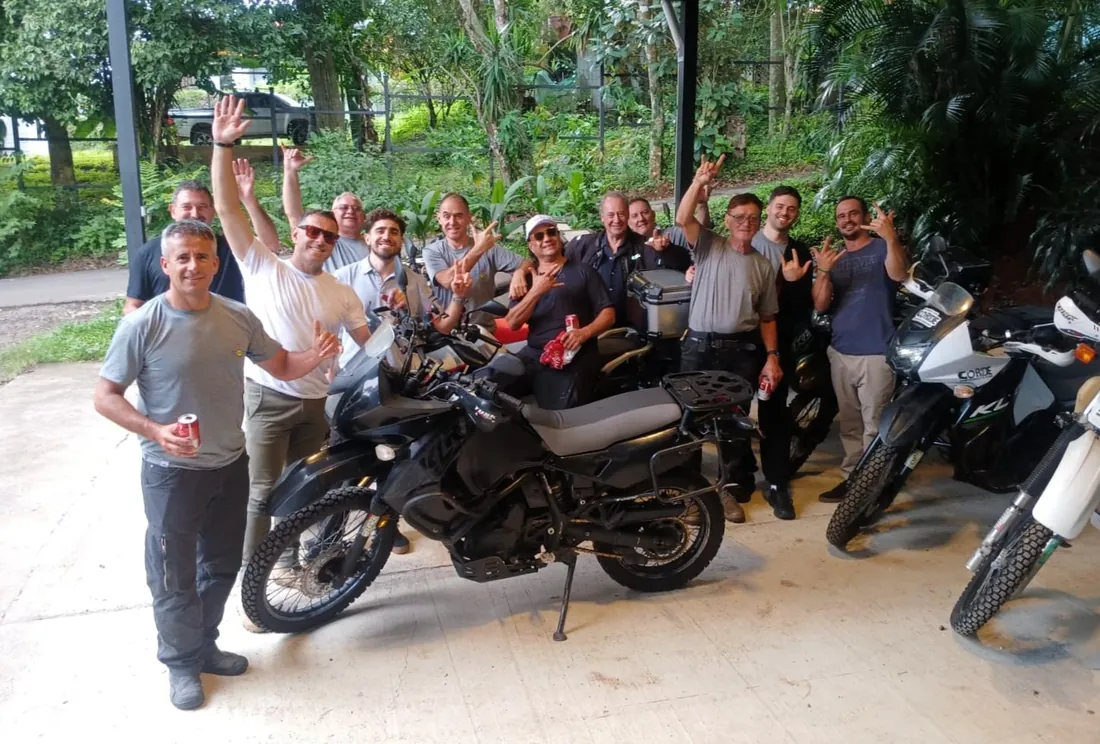
It's often the first question: what license do you need to rent a motorcycle in Costa Rica? The answer is simple, with one condition. Your driver's license is enough for your entire stay, as long as it allows you to ride the bike you're renting back home. Here's what the law says, what you need to carry, and the few rules of the road that concern riders.
Your foreign license, for your whole stay
Since 2024, a tourist can drive in Costa Rica on their home-country license for as long as the stay granted to them on arrival. Two laws, 10470 and then 10591, rewrote article 91 of the traffic law to that effect. Before, the rule was three months.
The length of your stay is set by the immigration officer when you arrive, and it's written on your entry stamp. It can be up to 180 days for many nationalities, but it isn't automatic: many travelers get 90 days, sometimes less. Check your stamp the day you arrive.
One detail to know if you're staying more than three months: another article of the same law, which hasn't been brought into line, still mentions three months. Keep proof of your entry date on you.
A license that covers the engine size
Costa Rica sorts motorcycle licenses into three categories: A-1 up to 125 cc, A-2 up to 500 cc, and A-3 with no limit. A tourist doesn't need a Costa Rican license: what counts is the category of their own license. The rule to remember fits in one sentence: your license must allow you, in your home country, to ride the bike you're renting.
- A car license alone only covers motorcycles of 125 cc or less, and only off the main roads. Our smallest bike, the Honda CRF 250L, is 250 cc: so it requires a motorcycle license.
- A European A license covers the whole fleet.
- The European A2 license is limited by power, not engine size. The KTM 390 Adventure and CFMoto 450 MT pages flag them as A2-compatible; for the others, tell us which license you hold and we'll answer bike by bike.
- In North America, the motorcycle endorsement on a driver's license generally covers all engine sizes.
To choose the bike that suits your license and your experience, read our guide. Which bike to choose for a first trip to Costa Rica?
What about an international driving permit?
Costa Rican law doesn't mention it. The UK's travel advice says a photocard license is enough, and the US authorities ask for a US license or an international driving permit. Rental companies generally only require one for a license written in a different alphabet from ours.
Our advice: if your license isn't written in Latin characters, or if it's an old paper license, get an international permit before you leave. It costs little and avoids any argument at a police check.
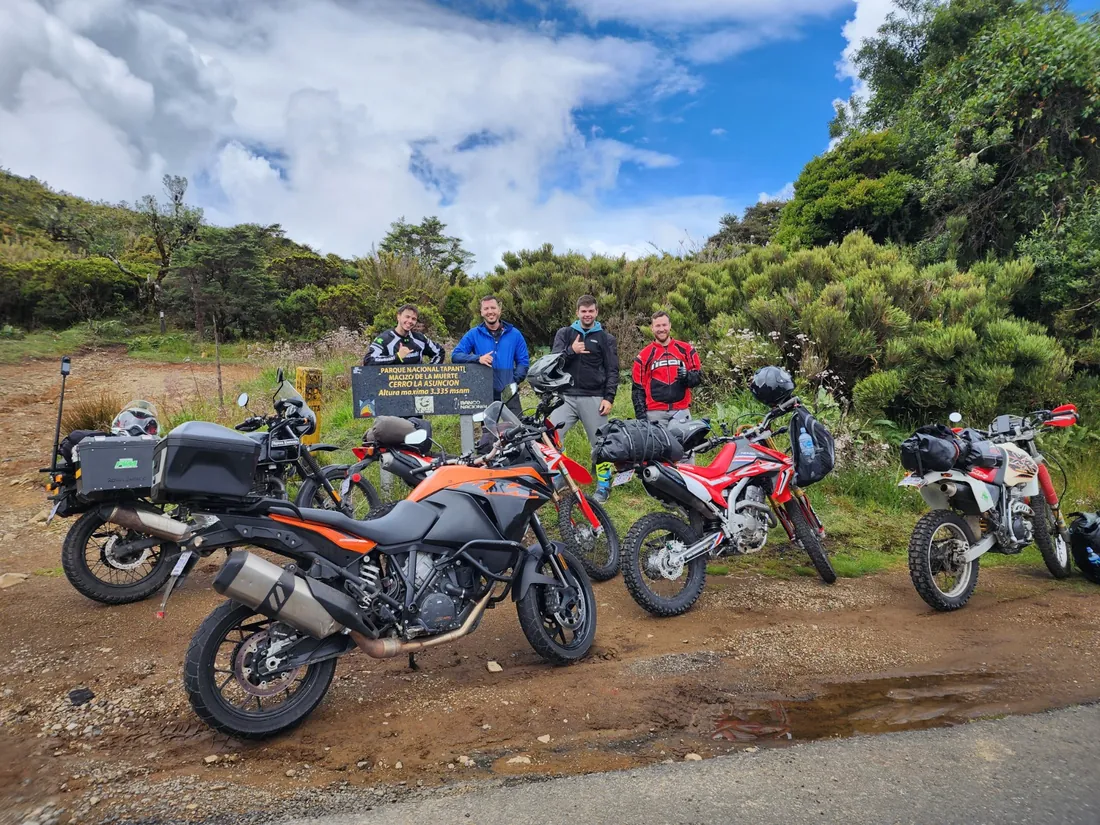
The papers to carry
- Your driver's license, and your international driving permit if you have one.
- Your passport. Sources don't all agree on the copy: bring at least a copy of the ID page and the entry stamp, and keep the original within easy reach.
- The bike's papers: title, annual road tax (the marchamo), technical inspection and mandatory insurance. They travel with the bike and are handed to you at departure.
Since late 2024, a license shown in digital form is accepted, and forgetting your license is no longer penalized if the officer can check it another way. Still, it's best to carry it.
The rules that apply to riders
- Helmets are mandatory for both rider and passenger, properly fastened.
- Reflective clothing is mandatory: a vest, or a jacket with reflective strips.
- Headlights stay on day and night.
- No passengers under five years old.
- Filtering past a line of cars is penalized above 25 km/h.
- Where there's no sign, the speed limit is 60 km/h, 50 km/h in town and 25 km/h near schools.
- San José's plate-based driving restriction doesn't apply to motorcycles.
Fines are no slap on the wrist: riding without a helmet, or without a valid license for that type of vehicle, costs more than 120,000 colones.
In Nicaragua and Panamá
In Panamá, a tourist can drive on their home-country license for 90 days. Nicaragua also accepts foreign licenses. On our tours in both countries, the bike's papers are prepared in advance and the guide crosses every border with you.
Each border crossing is covered in detail in our guides. Crossing the Nicaragua border by bike
Rules checked in October 2026 against the texts published in La Gaceta (laws 10470 and 10591) and the official travel advice. They change, and only the authorities have the final word. This article is not legal advice.