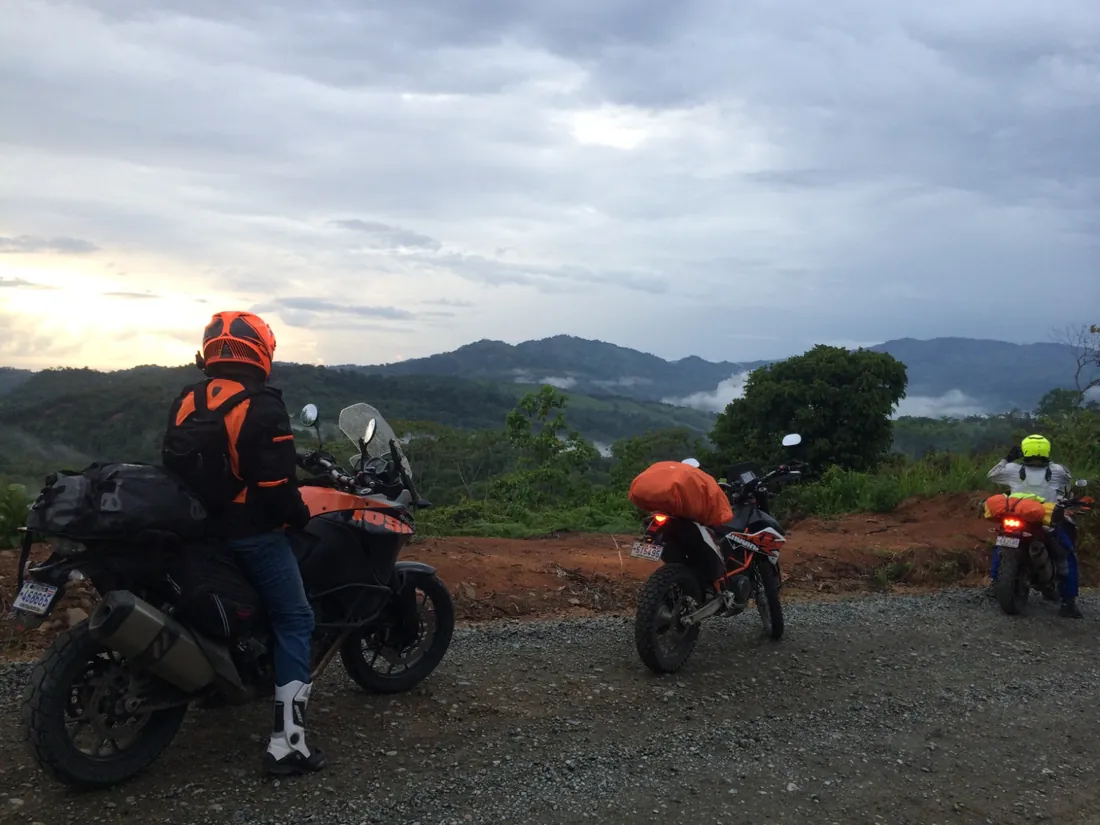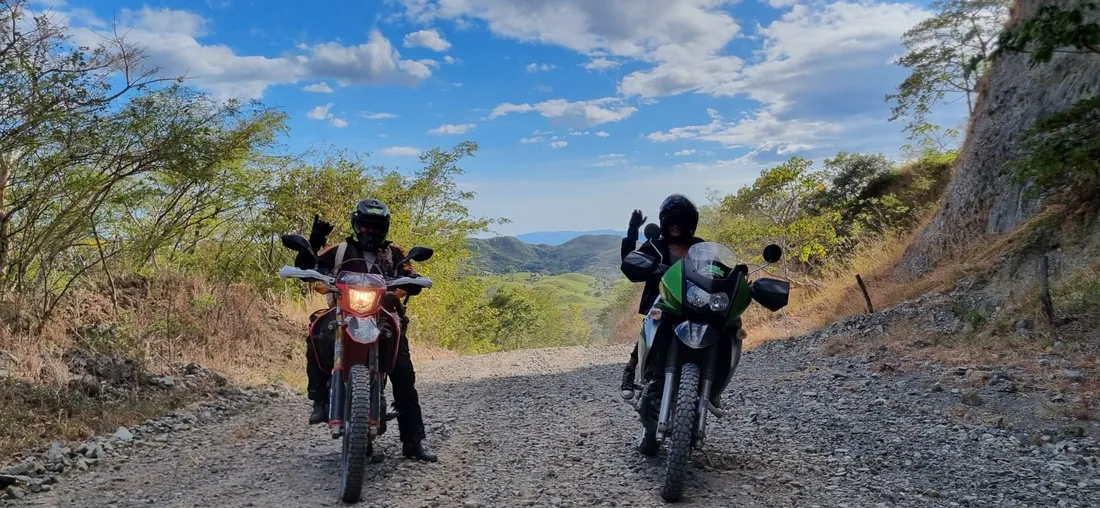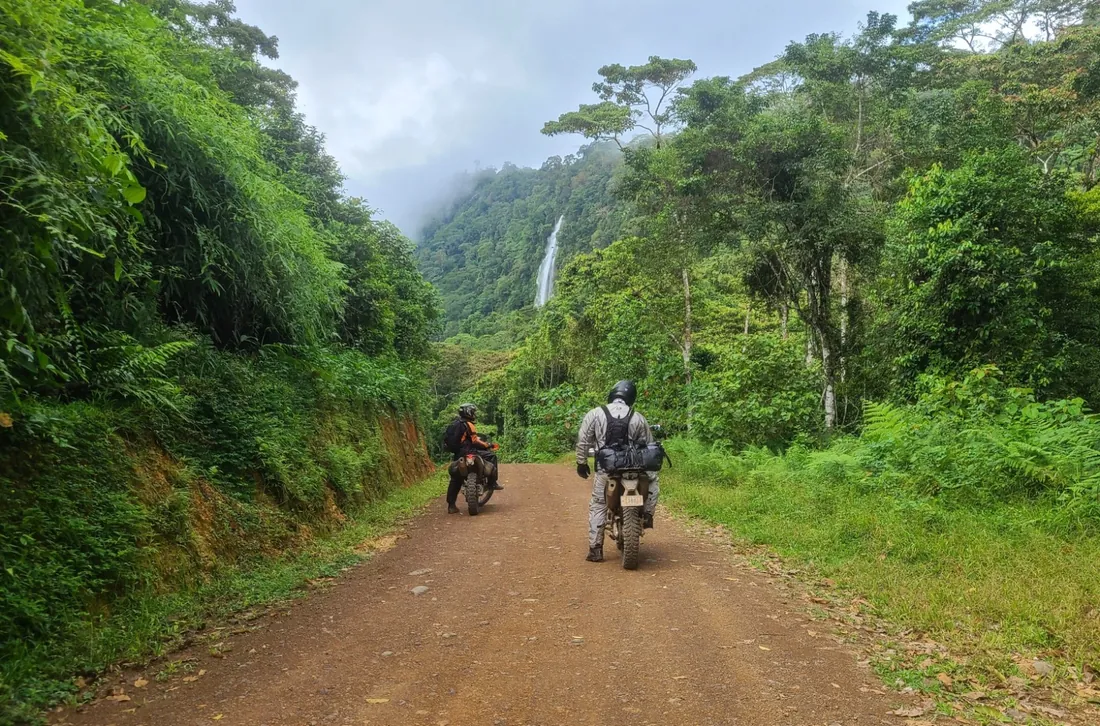
An exit tax, insurance, fumigation and a few counters: how the crossing into Panamá works, and what to carry with you.
Key points
- Two crossings for a bike: Paso Canoas on the Pan-American Highway, Sixaola on the Caribbean side.
- Allow an hour and a half to two hours, longer on Sundays and in the middle of the day.
- Valid passport, return ticket, proof of funds and dollars in cash.
- The bike enters with Panamanian insurance and a free temporary import permit.
- With us, bikes only cross the border with a guide, who prepares their paperwork.
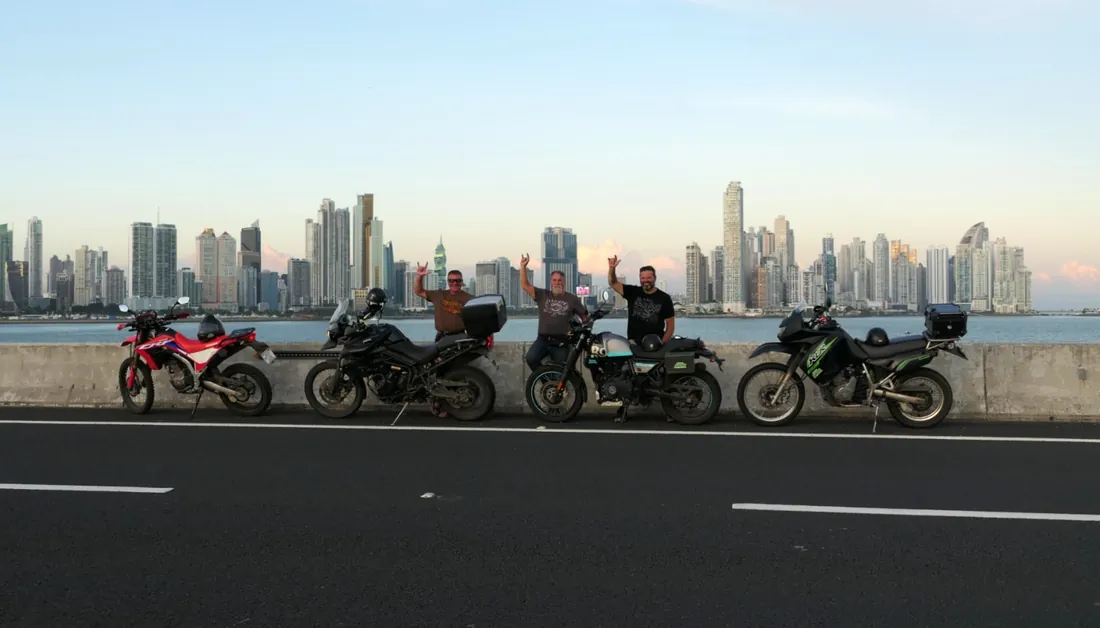
Panamá is a motorcycle trip like no other: the Caribbean coast, the mountains of Boquete, the Pacific and, at the end of the road, the canal. To get there, you have to cross the border. Nothing difficult, but there is an order to follow and a few dollars to budget for. Here's how the crossing between Costa Rica and Panamá works on a motorcycle.
Paso Canoas or Sixaola
Most travelers cross at Paso Canoas, on the Pan-American Highway, in the south of the country. It's the easiest crossing for a vehicle. On the Caribbean coast, the Sixaola and Guabito crossing has been linked by a road bridge since 2021: that's where our tours enter Panamá, on the way to Bocas del Toro. Its hours are shorter, so it's best to get there in the morning. Mind the time difference: Panamá is one hour ahead of Costa Rica.
A rented bike doesn't cross on its own
A motorcycle registered in Costa Rica can only leave the country with an exit permit requested by its owner, and a notarized authorization when the rider is not the owner, which is the case with a rented bike. At Pura Vida Motorbike, bikes only cross the border with a guide, as part of our Panamá and Nicaragua tours: we prepare these documents, and the guide goes with you to every counter.
The crossing, step by step
On the Costa Rican side, leaving the country:
- You pay Costa Rica's land exit tax: $8, which can be paid online in advance.
- You get your passport stamped at Costa Rican immigration.
- The bike goes through customs, which records its exit from the country.
On the Panamá side, coming in:
- First, you buy the mandatory Panamanian insurance at the official counter: the bike can't enter without it.
- The bike goes through fumigation, for a few dollars.
- You go through Panamanian immigration. The officer may ask for a ticket out of the country and proof of funds of at least $500.
- The bike goes through customs: a temporary import permit is issued, free of charge, for thirty days.
A few kilometers past the border, a police checkpoint often checks papers: keep them together and within easy reach.
On the way back, the same route in reverse: you hand back the Panamanian import permit on the way out, then enter Costa Rica, where you may be asked for your return flight ticket.
How long, and how much?
As a rule, allow an hour and a half to two hours each way, longer when it's busy. Avoid Sundays and the middle of the day. Budget-wise, plan for the Costa Rica exit tax, the Panamanian insurance, which runs a few dozen dollars, and the fumigation: around fifty dollars per bike in all, according to travelers who have crossed the border recently.
The papers to carry
- Your passport, in good condition and valid for at least six months after your return date.
- Your return plane ticket, requested on entry into Panamá and on your return to Costa Rica.
- Proof of funds of at least $500, in case the officer asks.
- Your motorcycle license: in Panamá, a tourist can ride on their home country license for 90 days.
- US dollars in cash, in small bills: Panamá uses the dollar, and colones aren't accepted there.
- A pen, and photocopies of your passport made after the exit stamp.
Good habits
- Arrive early in the morning, on a weekday if possible.
- Check on the Panamanian import permit that the bike's plate and serial number are correct: a mistake costs you on the way back.
- Only buy the insurance at the official counter, and turn down middlemen offering their services for a fee. On our tours, the guide takes care of it.
- Check your country's travel advice before you leave: Panamá's entry rules change.
Heading north too? The crossing into Nicaragua has its own guide. Crossing the Nicaragua border by bike
Amounts and rules as of October 2026, for guidance only. They change: only the authorities of both countries are authoritative.